Showing posts with label BMW. Show all posts

13 September 2017

Frankfurt Motor Show - Sustainability Highlights

When I first started writing about the sustainability highlights of the global motor shows in 2015 (which of course wasn't that long ago), things were very different. 'Dieselgate' hadn't happened, and for the majority of manufacturers, introducing a mild-hybrid into one model felt like a sensible 'toe-dip into the water' around future powertrains.  Fast forward to today, and Frankfurt 2017 was always going to be a milestone, with the German automotive industry using it as a showcase of their future strategies.  Rather than outline all of the new models and concepts, I've picked-out a few of the significant updates, with each title providing a link to further information from the manufacturer.

Audi Aicon

Audi have revealed their Audi Aircon design concept, with advanced autonomous controls meaning the inside space is a luxurious place to relax.


Audi Aicon Design Concept
BMW i3s

Announced towards the end of August, the BMW i3S is a sporty take on their highly successful i3 (which has also had some revisions). Coming with a 135kW electric motor, and sports suspension, the i3s should appeal to the more enthusiastic driver. A 2 cylinder petrol engine is available to provide range extension too, as an option.


BMW i3s

BMW i Vision Dynamics (i5)

Still at BMW, their much anticipated EV to sit between the i3 and i8 has been revealed in concept form.  It is likely to be called the i5, with four doors, and an anticipated range of 373 miles.

It's due to be launched in 2021, perhaps giving the chance for Tesla, Jaguar and even Mercedes to build significant market share with their respective models.  I'd also assume that with improved battery densities, they might revise the range upwards before then?

Worth also mentioning that BMW have announced their intention to offer 25 models with an electrification option by 2025, with 12 of them being pure electric.


BMW i Vision Dynamics (i5)

Honda CRV

With the number of SUVs being sold in Europe, and the vast majority being diesels (Toyota RAV4 Hybrid and stablemate Lexus NX300h/RX450h being exceptions), it's great to see the popular Honda CRV getting a Hybrid option.  But perhaps what's more interesting is that the only other option in Europe will be a 1.5 litre turbocharged petrol engine - a very clear sign that they don't see the market for diesels in the very near future.


Honda CRV Hybrid

Honda Urban EV Concept

Honda have stolen a lot of headlines, and perhaps some hearts, with its cute and gorgeous Urban EV Concept.  With a more than a whiff of Mk1 Golf, I expect VW are fuming at such a vehicle being released in Frankfurt!  Although it's just a concept, Honda have confirmed a 2019 production release for something very similar, so I'd be surprised if it isn't a strong seller.


Honda Urban EV Concept


Honda Urban EV Concept

Honda have also committed that every new European model will have an electrification powertrain option.

Finally, Honda also released more information about their Power Manager proposition. Similar to solutions from Nissan, it's some clever hardware and software which will allow a user to optimise the energy consumed, stored and sold through a 'Vehicle to Grid/Home' (V2G/H) solution.


Honda Power Manager

Jaguar IPACE eTROPHY


We've already seen the launch of the iPace, due to hit showrooms next year.  But Jaguar didn't disappoint us - outlining the introduction of a new racing series to run alongside the Formula E races.  Much like the existing Touring Car Championship in the UK, let's hope it delivers a really exciting and engaging showcase for EVs. Jaguar Land Rover will offer an electric option (inc. hybrid) in all its model lineup from 2020, with rumours of a plug-in Range Rover Sport to be released this year


JAGUAR IPACE eTROPHY

Mercedes EQA Concept

By 2022, Mercedes-Benz Cars is planning to have more than ten all-electric vehciles on the market - and their EQA concept shows how they might tackle the compact segment.  It will have twin electric motors (one per axle), and a range up to 400km.

Mercedes EQA Concept


MINI Electric Concept

Not wanting Honda to take all the cuteness points, MINI (part of the BMW Group) have revealed their MINI Electric Concept, planned to be built in Oxford (but powertrain built in Germany)

 
MINI Electric Concept


Smart Vision EQ ForTwo Concept

With traditional car ownership dwindling, and car/ride-sharing models growing in significance, I was surprised not to see more models explicitly designed to support these new business models.  Daimler-owned Smart have done so though, with a neat concept, the Smart Vision EQ ForTwo Concept.


Smart Vision EQ ForTwo Concept


Samsung SDI

Finally, Samsung revealed some battery innovation, with a modular system, allowing additional modules to be added to deliver additional range. They've also introduced a reduced height form-factor, inevitably of interest to car manufacturers wanting to maximise internal space. 

Samsung SDI

27 February 2016

Geneva International Motor Show 2016 - Sustainability Highlights


The 86th Geneva International Motor Show gets underway in early March, and it's a key time of year for manufacturers to introduce models with the European buyer in mind.  Alongside the exotica, of course there are a large number of concepts and launches which help deliver a more sustainable driving experience.  Here are the sustainable highlights...

Arash AF10

If you were playing 'Top Trumps', you'd do worse than to have a card for the Arash AF10.

Arash AF10
  • 0-60mph - 2.8 seconds
  • 2080 bhp
  • 200mph+ top speed
  • 1 petrol engine
  • 4 electric motors
  • 5 gearboxes

 BMW 740e iPerformance

The BMW 740e iPerformance is a plug-in hybrid, which is the first to use the important iPerformance subbrand.  This demonstrates where technologies from the 'i' sub-brand (i3/i8) are being mainstreamed into the main BMW lineup.


The powertrain is the same as the X5 xDrive40e, namely a 2 litre petrol engine, mated to an electric motor.  LWB and xDrive variants will be available.

DS E-TENSE

The PSA Group recently re-launched its DS brand as a premium offering. And for Geneva, they're introducing a all-electric concept vehicle, the DS E-TENSE.  The electric motor produces 396bhp, from a 53kWh battery.

DS E-Tense Concept


Hyundai IONIQ

Like most car manufacturers, Hyundai has probably looked at the success story of the Toyota Prius with initial scepticism and pity, quickly turning into envy!  Well, Hyundai hopes it has got a 'Prius killer' on its hands, with the new IONIQ.


The IONIQ lineup includes the three main powertrains which have the potential to become mainstream in the next few years - pure electric, plug-in hybrid, and hybrid - the world's first model to do so. [Remember, they already brought the ix35 fuel-cell SUV to market, so have hydrogen covered too].

The hybrids have a 1.6 litre petrol engine, then depending on the model, different specifications for the electric motor output and battery capacity are used.  It will be really interesting to see how the different models sell in different markets - an experiment even Toyota will watch with interest.

 Kia will be revealing their Optima Plug-in hybrid at Geneva, with a 33 mile pure electric range, provided by a 9.8 kWh lithium-polymer battery pack paired with a 50 kW electric motor.  There's also a 2.0 litre diesel engine.
Kia Optima Plug-in Hybrid


Lexus will launch a hybrid version of the LC500, using a 3.5L V6 petrol engine, coupled with an electric motor.


Lexus LC500h

Lexus LC500h


The Morgan Motor Company is one of the few surviving British car manufacturers, with an illustrious history dating back to 1909.  With a strong heritage of coach-building, the family-run company is keeping apace with its multinational manufacturer competitors, by introducing a new concept at Geneva, the EV3.  A 62bhp electric motor and lithium battery gives a range of 150 miles, a top speed of 115mph and 0-62mph in 8.0 seconds.

Morgan EV3
In the medium-term, Morgan are also benefiting from £6m of funding from the UK Government, to help develop hybrid and electric powertrains.


Nissan

Nissan have partnered with renowned architects Foster & Partners to outline a vision of the future fuel station - and my personal view is that is spot-on (except maybe the driving the car into work, literally!)  They have created a video which helps bring the concept to life:


SsangYong SIV-2 Concept

SsangYong are due to release a mild-hybrid concept, the SIV-2 [SIV = Smart Interface Vehicle].  A 1.5 litre petrol engine will be paired with a 10kW electric motor, supported by a 0.5Kwh battery.


Toyota C-HR

Toyota have revealed a production version of the C-HR, prototypes which have been seen in previous motor shows.  There is a full hybrid option and it's based around the Prius architecture, but arguably its looks will appeal to a different customer segment.  It is reported to have emissions less than 90g/km.

Toyota C-HR


--------
All images © respective manufacturers

07 February 2016

Why EV batteries are like Star Wars™

I'm one of the very few people that I know who hasn't ever watched a Star Wars™ film (I see this as a badge of honour).  Arguably therefore, I'm not the best person to reflect on the parallels between Star Wars™ and Electric Vehicle (EV) batteries.  So I won't, other than to say that in the same way Star Wars™ has its sequel and prequel, business models are emerging which give EV batteries the same accolade.

The original - Batteries used in EVs and hybrids

We're all familiar now with batteries in a vehicle's powertrain.  There are a variety of different approaches - conventional hybrids, plug-in hybrids and electric vehicles.  Due to ever-tightening tailpipe regulations and tax incentives for drivers, almost all manufacturers have at least one of these in their model range, and I expect by 2020, almost every model from every manufacturer will have a hybrid/electric option.

Toyota Prius 2016 - Conventional Hybrid

BMW 740e -Plug-in Hybrid

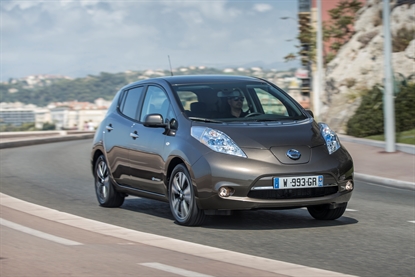
Nissan Leaf - Electric Vehicle
In all of these cases, it's expected that the battery lasts as long as the vehicle itself.  Obviously, as a relatively new technology, time will tell, however, there is some very encouraging news from Nissan, showing a 99.99% reliability after 5 years (only 3 problems with 35,000 sales in Europe) - a much better reliability record than cars with a conventional engine.


One of the perceived drawbacks of an electric vehicle is the time taken to charge the battery.  Although the growth of rapid chargers makes this a reduced issue, an alternative is to be able to 'swap-out' the batteries.  Popularised by Israeli start-up Better Place, now Elon Musk's Tesla is trialling a similar approach to compliment its fast charger network:


Eventually though, EV/hybrid batteries will reach the end of their life in a car, but that doesn't mean the battery cannot be used in another form... Time for a sequel...

The sequel - the EV/hybrid battery secondary market

To minimise the carbon footprint of a battery, and extend its use phase for as long possible, manufacturers are starting to look at partnerships where their batteries can be re-used in another form.

Renault have announced a partnership with Connected Energy, where their E-STOR proposition uses batteries from Renault cars to support storage from intermittent renewable sources, or for EV charging solutions.

Connected Energy's collaboration with Renault
And in the US, Nissan are partnering with Green Charge Networks with a similar proposition.
Nissan's US partnership with Green Charge Networks

Finally, in the US, BMW are running an innovative V2G demand response programme, BMW i Charge Forward, allowing 100 BMW i3 drivers to earn extra income from demand response requests from their utility PG&E. In parallel to this, some additional static storage is being provided by used Mini E batteries.

So that's the sequel understood.  But a prequel...?

The Prequel - a living parts store

Earlier in this article, news from Nissan gave us confidence that batteries in vehicles are more reliable than sceptics assumed.  But of course, there are situations where batteries will need to be replaced... and manufacturers need to have spares available.  In an innovative partnership with enercity, Daimler will create a 15MWh storage facility, using batteries which are yet to be used in a car - they call it a 'living parts store'.  Its energy storage will be marketed in the German primary balancing power market, helping provide a lower-carbon mechanism to flatten/shift grid peaks.  And incredibly, managed charging and discharging is exactly what a battery benefits from, rather than a 'deep discharge' if it's just sat on a shelf.

Daimler's Energy Storage facility
The spin-offs

Obviously lithium-ion batteries don't need to have a direct use-case around vehicles, and car manufacturers are very aware of that.  Telsa is making an impact in the domestic energy storage market with its Tesla Powerwall (the first UK installation was made in a home in Wales last week). 

Tesla Powerwall

They are also making the technology available at the utility level, with the Powerpack. Their Gigafactory will be churning-out large numbers of batteries (it's ahead of schedule) - I wonder if they are exploring the 'living parts store' option too...

And, as I wrote in an earlier article, Daimler are actively working in the same way, partnering with EnBW AG for private customers.

Daimler Energy Storage Solution
Summary

As car manufacturers introduce lithium-ion batteries into powertrains, the driver benefits from improved fuel consumption, tailpipe emissions are reduced/eliminated, and they may even be able to use their car battery to provide energy to their home (V2H) or the grid (V2G).  But as we've seen above, the associated business models mean the potential for car batteries to provide an even greater contribution to our energy ecosystem are really exciting.

So, a tenuous link to Star Wars™ I admit, but with the humble lithium-ion battery making futuristic transformations to our energy system today, who needs fantasy action adventure films? 

End Credits

All images © respective manufacturers unless otherwise stated.

07 January 2016

CES2016 - Sustainability overview

The Consumer Electronics Show (CES) in Las Vegas is where manufacturers large and small reveal the latest technology in a hope to be the 'next big thing'.  Reports suggest that Artificial Intelligence and HDR TVs are prevalent.  Superficially, materialism and consumerism aren't going to have much to do with sustainability (and neither does Las Vegas!), but dig a little deeper, and one can see some real potential of technology being a sustainability enabler...  Below there are sections on:

Vehicles and Mobility

The fact that several mainstream car manufacturers are choosing CES to launch their new innovations goes a log way to demonstrate some of the fundamental transformations that are happening to the industry:
  • Gas guzzling power to alternative powertrains
  • Splendid isolation to reliable connectivity
  • Car sales to mobility solutions
  • Driving skills to relaxing autonomy
  • Traffic congestion to smart traffic management
Here are some of the announcements which are whetting the appetite of the 'green motorist'...

BMW i Vision Future Interaction


The already desirable BMW i8 electric vehicle just got even better, with the roof removed in the gorgeous 'i Vision Future Interaction' concept (i.e. i8 Spyder).  As a showcase for its autonomous driving and gesture controls, it's an eye on an all-electric future not too far away...

Faraday Future

Touted as a potential Tesla rival, Faraday Future have revealed their much anticipated all-electric supercar, the FFZERO1


Faraday Future FFZERO1
Here's their inspiring teaser video, outlining their vision goes way beyond the traditional model of car ownership:


Ford


The expected announcement around a tie-up with Google hasn't happened (yet), but Ford did talk about their electric vehicle roadmap, suggesting they have more patents in the area than anyone else, and will bring 13 electric vehicles to the market by 2020.


They also announced a significant investment in its autonomous vehicle programme, with potential sustainability opportunities to support smart traffic management, reduced accidents (and therefore congestion), and vehicle sharing access models.


Ford Fusion autonomous spatial mapping


Volkswagen BUDD-e

With a desperate need to reposition itself with a robust sustainable future roadmap, VW have launched their BUDD-e - a futuristic reinterpretation of their iconic microbus.  With 4WD, and all-electric powertrain, and estimated 233 mile range, its floor-mounted batteries can be charged to 80% within 30 minutes.


VW BUDD-e
It remains to be seen whether this prototype, which is not dissimilar to their Bulli prototype revealed in 2012, can create the step-change shift required to win back customer loyalty.


Smart Cities

AT&T took the opportunity at CES to announce a major push into smart cities.   Not only have they got strategic partnerships with Cisco, Deloitte, Ericsson, GE, IBM, Intel, and Qualcomm Technologies, Inc., but signed-up Atlanta, Dallas, Chicago and the Georgia Institute of Technology. Why are smart cities important from a sustainability perspective? Well, quite simply with the population growth and migration to cities continuing unabated, unless cities find a way to manage traffic, air quality, water usage, building energy efficiency and waste minimisation, cities are going to become pretty unpleasant places to live. Or as Mike Zeto, General Manager of Smart Cities, AT&T IoT Solutions says more eloquently - “...Our holistic strategy can help cities save money, conserve energy, improve quality of life, and further engage with their citizens.”

Meanwhile, Panasonic has announced it has an agreement with Denver to provide its CityNOW proposition to support its transformation into a smart city.


Smart Home

The smart home has been the 'bread and butter' of science fiction for decades, but it's now very much reality.  With a reliable, fast internet connection, and the prevalence of smart phones and tablets, smartphone control of the home is very accessible.  Alongside security and entertainment, energy management (e.g. via smart LED lighting, internet-enabled thermostats, smart plugs, etc.) provides a real opportunity to optimise energy spend.  Some manufacturers with new products are introduced below (in alphabetical order).

CastleOS voice-activated hub


Using Microsoft's Kinect microphone system, the CastleOS Hub provides voice-activated integration with a large number of other manufacturers' smart kit.


Elgato Eve

Providing integration with Apple Homekit, Elgato's Eve provides hardware and software to monitor "air quality, temperature, humidity, air pressure, energy consumption and more".

Elgato Eve

Honeywell Lyric

Honeywell have produced their own smart thermostat, with smartphone app, called Lyric.

Honeywell Lyric Thermostat

They've obviously given their design teams something nice in the staff canteen, as the thermostat, and app look great.  Water leak and freeze sensors are also available.

Honeywell Lyric App

It's compatible with Apple Homekit and Samsung SmartThings.


iDevices

The connected home proposition from iDevices has been strengthen with some new devices (it already had switches and a thermostat in its lineup).  The new devices, with Apple Homekit compatibility, are a wall socket, wall switch, dimmer switch and socket (for lights).

iDevices Connected Home

LG SmartThinQ™ Hub

LG's smart-home hub is a little different to its competitors - as well as managing the wireless data flows between sensors, smart appliances and a smart-phone, it can also display calendar notifications, and is a speaker for music.
 
LG SmartThinQ™ Hub


Lowe's Iris

After recently announcing its next generation of Iris, at CES, Lowe's announced a professional security monitoring service for $20 per month, with cellular backup.


O2

O2 has announced it will be offering AT&T's 'Digital Life' platform and smart thermostat from tado° to its UK customers this year.

Panasonic ÔRA

Panasonic has introduced a flexible software platform, called ÔRA, aiming to provide smart-phone based control across a range of OS-agnostic devices to cover "lighting, heating, cameras, motion sensors and smart appliances".


Samsung

Just before CES, Samsung announced the inevitability that their TVs will be integrated into the SmartThings platform.  Perhaps more interestingly, at CES they've now revealed a tie-in with BMW, so drivers can check-up on their smart home from the comfort of their seat (presumably whilst stopped!).


TP-LINK

TP-LINK have revealed their SR20 all-in-one router and IoT hub, controlling wi-fi, Zigbee and Z-wave wireless data.

TP-LINK SR20 Smart Home Router


Mobile Power

Finally, UK-based Intelligent Energy revealed some consumer electronics prototypes, powered by hydrogen fuel-cells.

Intelligent Energy Hydrogen Fuel-cell prototype


All images © copyright respective manufacturers, unless otherwise stated.

14 September 2015

Frankfurt Motor Show - Highlights

Here's a selection of the highlights from the Frankfurt Motor Show, where manufacturers have made significant incremental, or in some cases revolutionary, improvements to the sustainability of the automobile.  Although it's hard to avoid the launch the (hideous) Bentley Bentayga, the Rolls-Royce Dawn, the Jaguar F-Pace, and the Ferrari 488 Spider, it's the news below which is setting the future direction of the industry.

Artega Scalo

The Scalo offers 402bhp from two electric motors powering the rear wheels. 0-60mph comes in 3.6 seconds. A 37kW battery supports a range of up to 250 miles.


Artega Scalo

Audi Q6 e-tron

Audi has released a concept all-electric SUV, sized somewhere between the Q5 and Q7. Its figures suggest innovation in aerodynamics contribute to a claimed range of 310 miles.


Audi Q6 e-tron concept
BMW

BMW is the 'traditional' manufacturer which I predict will be the first to have an alternative powertrain available in all of its model series first.  And a pre-show announcement has helped them achieve this...

BMW 225xe Active Tourer

The Active Tourer 225xe mates a 134bhp front-mounted 1.5L petrol engine, with a rear-axle mounted 88bhp electric motor.  25 miles of electric-only range should be possible, courtesy of the 7.7kWh lithium ion battery.

BMW 225xe Active Hybrid

BMW 225xe Active Hybrid

BMW 330e

Also delivering a 25 mile all-electric range, the 330e has a different powertrain - a 2L petrol engine, alongside a 65kW electric motor.  A top speed of 140mph (75mph in electric only), as low as 44 CO2 g/km.


BMW 330e

The powertrain within the BMW 330e


BMW 740e

To complete the trio and with 25 miles of all-electric range again, the 740e will be available in standard and long wheel based version (the latter also available as an xDrive 4WD option). Claimed figures are 134mpg and 49g CO2/km.

BMW 740e
Mercedes Concept IAA

Mercedes has introduced a new design language and world-beating aerodynamics in its IAA Concept (Intelligent Autonomous Vehicle')


Mercedes Concept IAA

Mercedes Concept IAA, with a Cd of 0.19
Its coefficient drag coefficient (Cd), is a mere 0.19, helped with automatic changes to the car's exterior above 80km/h.  And this isn't just about a rear spoiler which raises at speed... The changes are:


  • Eight segments extend at the rear, increasing its length by up to 390 millimetres
  • Front flaps in the front bumper extend by 25 mm to the front and 20 mm to the rear, improving the air flow around the front end and the front wheel arches
  • The Active Rims alter their cupping from 55 mm to zero
  • The louvre in the front bumper moves 60 mm to the rear, improving the underbody air flow

With a petrol-electric hybrid powertrain, CO2 emissions can be as low as 28g CO2/km.


Nissan Leaf

The Nissan Leaf has been a global success, in fact is the world's best-selling EV. And now Nissan have announced improvements, which include a 30kWh battery, increasing the motorway range to 250km, for only a 21kg increase in weight.


Nissan Leaf with 30kWh battery

Peugeot FRACTAL Concept

Peugeot have launched a new concept car, the FRACTAL, an electric urban coupe.  Its main focus is on sound, supporting their i Cockpit® sight and touch sensory experience.


Peugeot FRACTAL concept
"The 30kW/h lithium-ion battery powers the electric motors on the front and rear axles to provide a total output of 150kW/204hp and combined-cycle autonomy of up to 450km"


Porsche Mission E Concept


  • 600bhp+
  • 331 mile range
  • 3.5 seconds to 60mph
  • 800V charging capacity
  • Tesla have some competition!


Porsche Mission E

Porsche Mission E

Smart ForTwo and ForFour

"Both vehicles will be fitted with an electric motor produced by Renault’s Cléon plant in France, the same one used in the Renault ZOE. The battery of the new smart electric drive will be produced by the Daimler subsidiary, “Deutsche ACCUmotive,” in Kamenz, Germany."

Thunder Power

A new entrant to the sector, from Taiwan, Thunder Power have introduced a concept car looking to take Tesla on with some impressive stats:


  • 430bhp
  • 373 mile range
  • Top speed of 155mph, with a 0-62mph sprint in less than 5 seconds

Thunder Power Concept

It's set for a 2017 release in Europe, so it will be interesting to see how much of an impact it will make, as more established brands enter this segment.


Toyota Prius

Back in 1997, Toyota released the Prius... and started a revolution.  Well, it's time for an update, and although you can see some familiarity with the previous versions, it's fair to say the latest incarnation takes more than a little inspiration from the hydrogen-powered Mirai.

Toyota Prius through the generations

The 2016 Toyota Prius
The petrol engine now boasts a thermal efficiency of 40%, whilst the new nickel-metal hydride hybrid battery is more compact with its durability and charging performance being significantly improved.  It's claimed that there's a 10% improvement in efficiency overall.

Volkswagen Tiguan GTE Concept

Alongside Volkswagen's refreshed Tiguan series, they have introduced a petrol-electric plug-in hybrid GTE concept.


Volkswagen Tiguan GTE
A 1.4L TSI turbocharged petrol engine is combined with an electric motor to power the front wheels, generating 215hp.  CO2 emissions are expected to be 42g/km.  The 13kWh lithium ion battery can also be topped-up by solar panels on the roof, with optimum sun conditions extending the car's range up to 621 miles.


Summary

With a combination of existing models being upgraded, and some new concepts released, the Frankfurt Motor Show has clearly demonstrated we're accelerating towards more sustainable motoring.  And if you're in the UK, and would like to see what's available on the forecourts today, please check out my UK Sustainable Car Directory.